What opioids are
Opioids include prescription pain medicines (oxycodone, hydrocodone, morphine, hydromorphone, codeine, tramadol, methadone), heroin, and synthetic opioids such as fentanyl and its analogs. Illicitly made fentanyl is very potent and is often mixed into other drugs, including counterfeit pills made to look like prescription medicines.
How an overdose kills
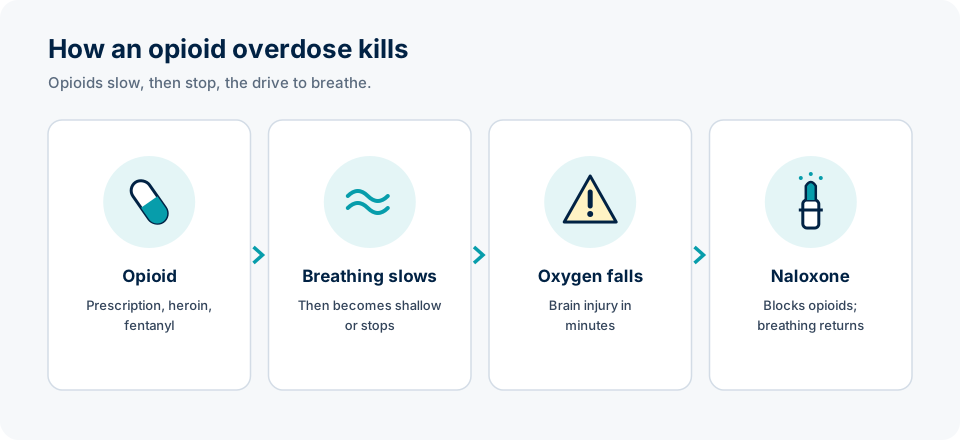
Opioids bind to receptors in the brainstem that control the urge to breathe. Too much opioid makes breathing slow and shallow, then it can stop. Oxygen levels fall, and within minutes the brain and heart are injured. Most overdose deaths are deaths from not breathing, which means they can often be reversed if someone acts fast.
Who is at highest risk
- Lost tolerance: after days or weeks without opioids, such as after release from jail or prison, detox, rehab or a hospital stay, the old dose can be fatal.
- Mixing: opioids with alcohol, benzodiazepines (like alprazolam or clonazepam), sleep medicines or xylazine deepen sedation and breathing problems.
- Unknown supply: fentanyl in pills or powders that people don't expect.
- Using alone: no one is there to respond.
- Prescribed opioids at high doses, or older adults and people with lung disease or sleep apnea taking opioids.
Where things stand
CDC's provisional data show about 80,000 drug overdose deaths in the U.S. in 2024, down about 27% from about 110,000 in 2023, the largest one-year decline on record. Synthetic opioids such as fentanyl were still involved in about 60% of deaths. Overdose remains a leading cause of death for young adults. Wider naloxone access is one of the factors experts credit.
Why this course matters: naloxone in the hands of the first person on the scene is what turns an overdose into a survivable emergency.
Key terms · tap to flip
Check your understanding
Knowledge check
Pick an answer to see the explanation. Get them all right to complete the lesson.
Part of the free MedRise Opioid Overdose Response & Naloxone Training. Built on the FDA-approved Narcan nasal spray label and CDC and SAMHSA overdose response guidance.