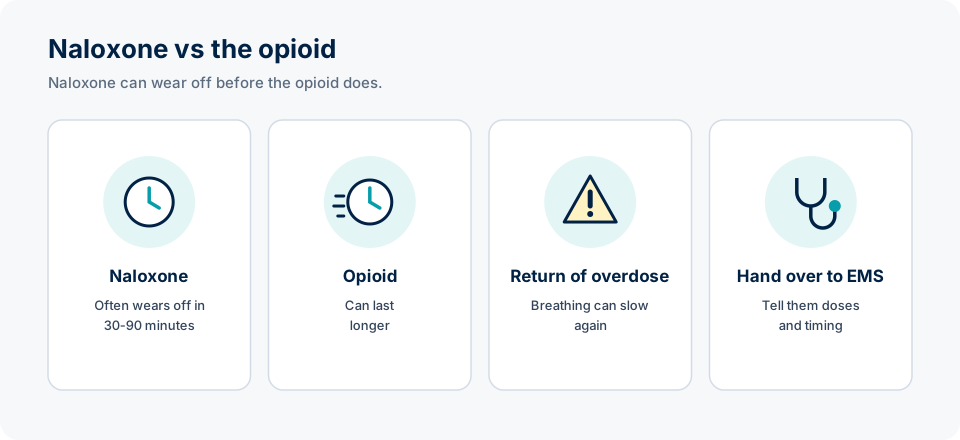
The duration problem
Naloxone works by knocking opioids off their receptors. But its effect often lasts only about 30 to 90 minutes, while many opioids, including long-acting pills, methadone and large doses of fentanyl, can last longer. When naloxone wears off, the opioid still in the body can make breathing slow down again.
That's why the Narcan label says to stay until the ambulance arrives, even if the person wakes up, and why everyone who gets naloxone should be evaluated by emergency medical services.
More than one dose
Fentanyl and other potent synthetic opioids may need two or more doses. Carry at least two doses if you can, and keep giving doses every 2 to 3 minutes if the person isn't breathing normally.
While you wait
- Keep the person on their side once breathing.
- Keep checking that they respond and breathe normally.
- If they become unresponsive or breathing slows again, give another dose and support breathing.
- Don't give food, drink or other drugs, don't put them in a cold shower or bath, and don't try to make them vomit.
Hand over to EMS
Tell the responders:
- When you found the person and what you saw
- How many naloxone doses you gave and when
- Whether you gave rescue breaths or CPR
- What drugs you think were involved, if you know
If they refuse to go to the hospital: adults have the right to refuse care once they can make decisions. Stay with them as long as you can, don't let them use again soon, keep naloxone nearby, and make sure someone checks on them.
Key terms · tap to flip
Check your understanding
Knowledge check
Pick an answer to see the explanation. Get them all right to complete the lesson.
Part of the free MedRise Opioid Overdose Response & Naloxone Training. Built on the FDA-approved Narcan nasal spray label and CDC and SAMHSA overdose response guidance.