What you're evaluated on
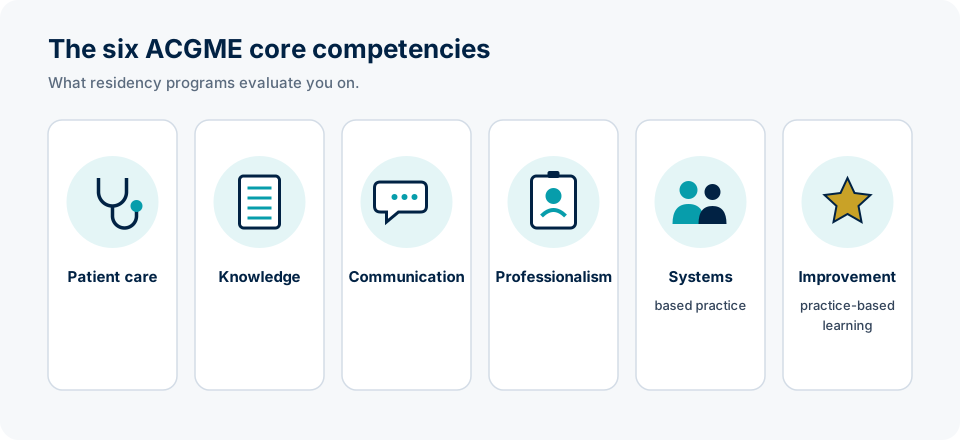
The ACGME, which accredits US residency programs, organizes expectations into six core competencies: patient care, medical knowledge, interpersonal and communication skills, professionalism, systems-based practice, and practice-based learning and improvement. Programs track residents' progress with Milestones in each. Letters of recommendation often speak to the same areas, so they apply to observerships and externships too.
Feedback culture
- Ask early and specifically: “What's one thing I could do better in my presentations?”
- Receive it with “Thank you,” a brief clarifying question if needed, and a plan, then show the change.
- Don't argue or explain at length; defensiveness is the most common professionalism comment on IMG evaluations.
- Ask for a mid-rotation check-in, not just end-of-rotation feedback.
Email and messages
Clear subject line, greeting with title (“Dear Dr. Smith”), short paragraphs, a specific ask, and your full name and role in the signature. Reply within one business day. Never put patient identifiers in personal email.
Letters of recommendation: ask in person or by a polite email, well ahead of your deadline, and offer your CV, personal statement and a short list of cases you worked on together. Thank them afterward.
Boundaries
- Don't accept friend requests from patients or connect with them on personal social media.
- Decline gifts of more than token value, per hospital policy.
- No romantic or financial relationships with patients.
- Don't give your personal phone number to patients.
Harassment and mistreatment
If you experience or see harassment, discrimination or mistreatment, you can report it to your program, school or the institution's reporting office. Retaliation for good-faith reports is prohibited by institutional policy and, in many situations, by law.
Duty hours and wellbeing
ACGME limits residents to 80 hours per week averaged over four weeks, with one day in seven free of clinical duties averaged over four weeks, and caps continuous scheduled duty at 24 hours plus up to 4 hours for transitions. Moving countries, visas, money and isolation add stress. Use your program's wellbeing resources. In a mental health crisis, call or text 988.
Key terms · tap to flip
Check your understanding
Knowledge check
Pick an answer to see the explanation. Get them all right to complete the lesson.
Part of the free MedRise US Clinical Etiquette & Communication for IMGs. Built on ACGME core competencies, AHRQ TeamSTEPPS, I-PASS handoffs and federal language-access rules.